


Building the Future of Functional 2D Materials with Florian Graßme
Florian Graßme is a researcher working at the intersection of 2D materials and nanosheet functionalisation. Their work in the 2D PRINTABLE project is laying the groundwork for future applications in printable electronics and nano-engineered devices.
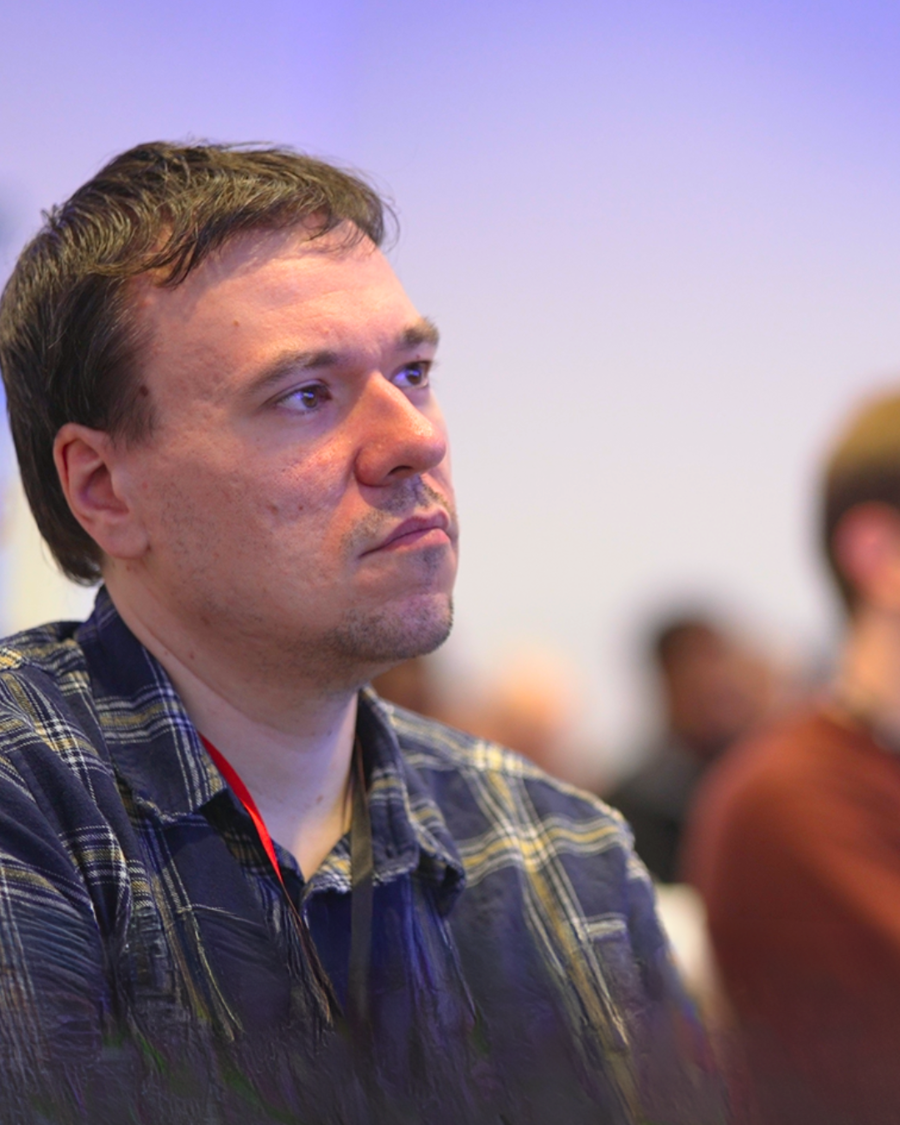
We’re working toward printable electrical devices by improving self-assembly and functionalisation, it’s about controlling conductivity at the nanoscale."
Impact Leader Graphene Week 2024
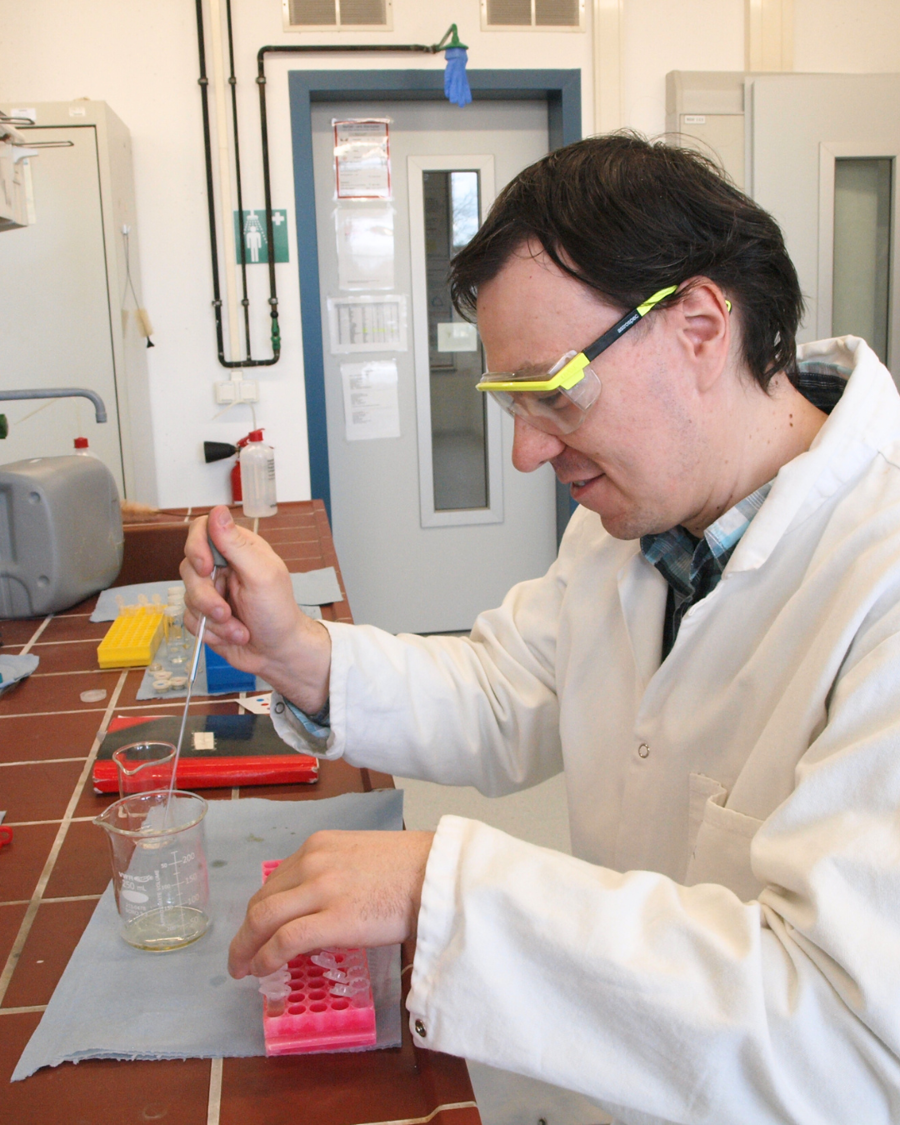
Functionalisation may well improve the application of 2D materials in general, especially through cross-linking."
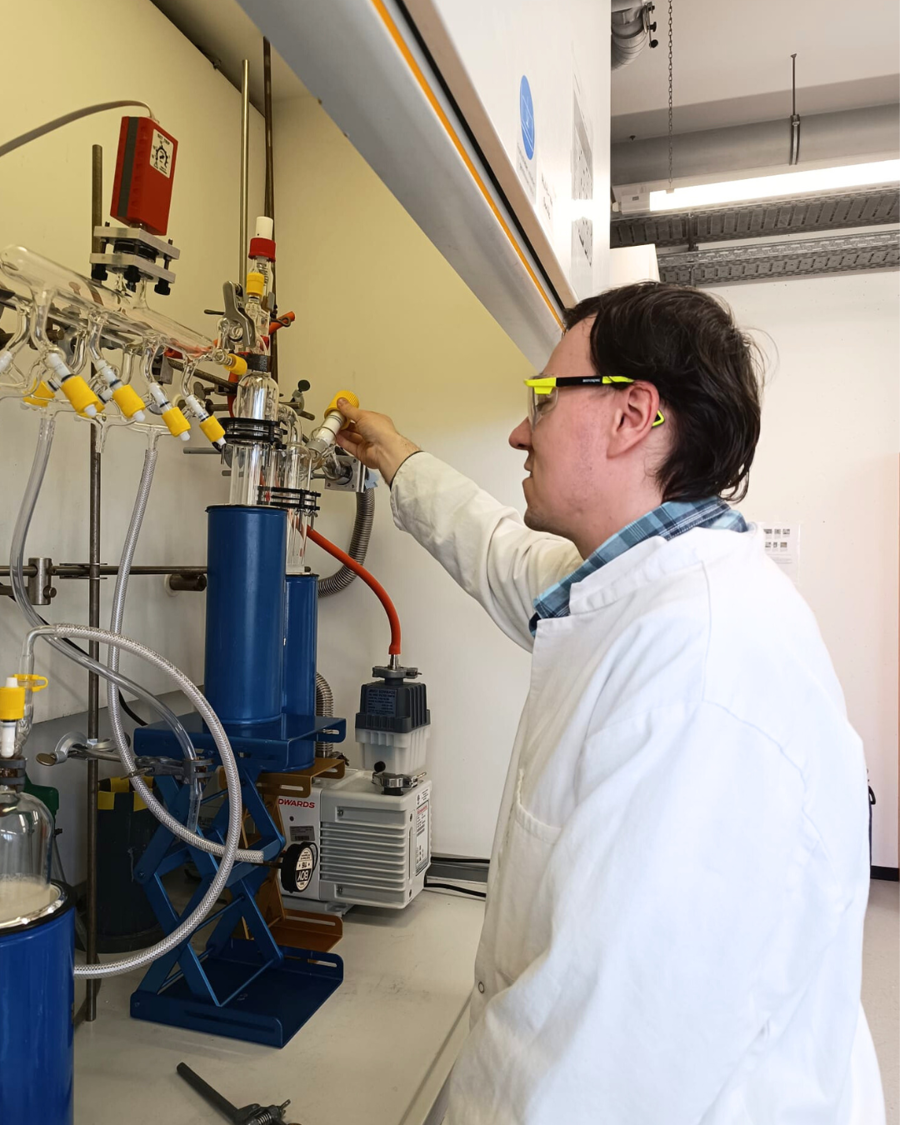
There is a lot of catching up to do around functionalisation."
How did you first start working with graphene/2D materials?
Student assistant at IFW Dresden (October 2020) with the solid state synthesis of 2D materials (KRhO2, TaRuTe4, Fe3GeTe2)
Why are you excited to work on graphene/2DM?
Versatility of 2D materials and the size-dependent properties of their nanosheets, but also to manipulate them further through functionalisation.
Who has been the biggest influence or mentor in your career so far?
No one
How did you first become interested in your current research project?
Thematic link to the topic of my master thesis, investigation of the change of magnetic properties by mechanical exfoliation of CuCrP2S6, NiPS3, CrGeTe3 and Fe3GeTe2.
Starting as a PhD student at the University of Kassel, Physical Chemistry of Nanomaterials under Claudia Backes, I became interested in the topic of functionalisation of nanosheets.
What’s your research focus? What is your current research goal?
Functionalisation of 2D nanosheets with diazonium aryl salts and the aim is the crosslinking of nanosheets horizontally during film formation to improve the carrier mobility in films and vertically to construct homo- and heterostructures with organic molecules with several suitable functional groups for functionalisation.
Currently, the influence of liquid phase exfoliation methods (LPE, CE and EE) on functionalisation with aryl diazonium salts is being investigated.
In what way can graphene and other 2DM improve this area?
Functionalisation may well improve the application of 2D materials in general, especially through cross-linking. Cross-linking could be able to significantly improve carrier mobility in films. It can also be used to create structures in the vertical plane, such as sensors.
Why do you feel your research is important, and what benefits could it bring to society?
Basic research to clarify the mechanism of the functionalisation reaction, on which parameters the degree of functionalisation depends and how this can be controlled.
Improvement of self-assembly during deposition through functionalisation → Increasing the conductivity of films. Construction of printable electrical devices, which will be created as part of the 2D printable.
As an early career researcher, where do you see your field going?
There is a lot of catching up to do around functionalisation. On the one hand, functionalisation is carried out with various functional groups such as thiols, diazonium, imides but also nanoparticles, Ln complexes, but their mechanism with the nanosheets has not been clarified.
Is it defect-induced or linked to the lattice atoms?
The development of new characterisation methods would also be likely to clarify such processes, among other things. Currently, many methods are needed to investigate the influence of functionalisation, but also to detect it qualitatively and quantitatively, which is usually associated with the loss of the functional group on the nanosheet.
What do you enjoy the most in your career path?
Flexibility of working time, creativity in problem solving, exchange with other scientists, also interdisciplinary.
Do you have a favorite anecdote or moment from your research journey?
Not yet, but I'm sure there will be more to come.
What is the most challenging part of your current work?
There is a lot:
- Develop a methodology for determining the degree of functionalisation with a TGA-GCMS.
- Design purification protocol for electrochemical MoS2 so that functionalisation can take place as like in LPE and CE.
- Test the cross-linking setup for functionalisation during film formation.
If you could work on any dream project involving graphene/2D materials, what would it be?
I am already working on this, which is the 2D PRINTABLE project.
What are your plans for the future?
The 2D Printable project expires at the end of September 2026. Depending on the status of the research data, there may be an extension of the employment contract in order to write and defend the dissertation. Then let's see where and how it goes on
Tell us about your experience at Graphene Week 2024. How was this event for you?
Graphene Week 2024 was my first conference and therefore came with many new impressions and expectations. In my opinion, the research focus was very focussed on applications, which only partially corresponds to my field of research.
How did you feel about winning the Graphene Week Impact Leader Award?
I was happy at first, but also confused because I didn't know exactly why I had won the prize. I was able to get an answer after asking. So it's a bit funny because I haven't been to any Graphene Week or any other conferences, so Graphene Week 2024 was my first conference.
Florian’s work on functionalisation and printable 2D materials is helping to push the boundaries of what’s possible in nanoscale engineering. Their contributions are laying the foundation for a new generation of devices and paving the way for practical applications that could transform electronics and beyond.
Author bio

Graphene Flagship
Bringing together 126 academic and industrial partners in 13 research and innovation projects and 1 coordination and support project, the Graphene Flagship initiative will continue to advance Europe’s strategic autonomy in technologies that rely on graphene and other 2D materials. The initiative, which builds on the previous 10-years of the Graphene Flagship, is funded by the European Commission’s Horizon Europe research and innovation programme.